Lovely Georgia peach
Carolina beautiful
She is my delight
You Will Not Abandon My Soul

You Will Not Abandon My Soul

Legendary Elizabethan dramatist and poet Christopher Marlow (1564 – 1593) was a contemporary of Will Shakespeare, and his life was shrouded in controversy. Whether Marlow was the “roguish rake” many critics claim is beside the point: this missive isn’t about authorial criticism. Though Marlow didn’t create it, he is known as the “father of English blank verse,” and he was a poetic genius. His work had a tremendous influence on Shakespeare’s work. See one of Marlow’s many online biographies posted on Encyclopedia Britannica.
This post is, rather, all about adaptation. “Come live with me and be my love” is the first line of Marlow’s “pastoral” lyric titled “The Passionate Shepherd to His Love.” The poem has been adapted in many ways over the years: around 1846, William Sterndale Bennett set the lyrics to a four-part madrigal; in 1995 the poem was adapted for the lyrics of a 1930s-style swing song in the 1995 motion picture Richard III, by Will Shakespeare (performed by singer Stacey Kent). The poem has even been adapted as a polka.
But this is my favorite adaptation, performed by the wonderful American singer Stacey Kent. The video includes music and scenes from the 1995 production of Shakespeare’s Richard III. The video is 5:42 minutes long, and the singing (Marlow’s lyrical poem) picks up at 2:15. It is a fantastic example of Renaissance art beautifully adapted for us moderns. I hope you enjoy this YouTube version.

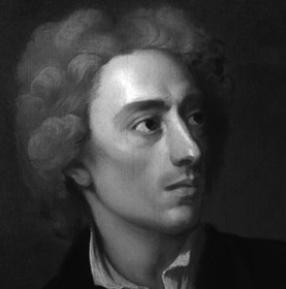
Poet Alexander Pope (1688 – 1734) demonstrated (arguably) the dominant voice of the 18th century. His mellifluous, moralistic, biting tongue produced remarkable satire and heart-wrenching prosody. His personal life was rife with controversy and he wrestled with physical health issues (a brief biography is offered on poets.org).
Pope’s “Eloisa to Abelard” (from which the line “Eternal sunshine of the spotless mind” springs) is an Ovidian heroic epistle inspired by an illicit love affair. The secret marriage between Eloisa and Abelard, who is an infamous teacher/philosopher, twenty years older than she, sets the stage for this 18th century tragedy. This poem eloquently plumbs the depths of the nature of human and divine love. See the complete text of the poem on the Poetry Foundation website.
And here is my tiny haiku, inspired by Pope’s life, his silver winged tongue, wit, and criticism, which qualifiy him as one of my favorite artists:

This is exciting. Have you ever wondered what, exactly, is a Harvest Moon? It’s the full moon you see within close proximity of the Fall (Autumnal) Equinox,
which happens on September 23 this year.
So on September 23, 2015, for those of us who live in the Northern Hemisphere, it will be the time of year when the sun shines directly on the Equator, and the length of your day and the length of your night will be nearly equal. So what does that have to do with the price of peas?
Not much, but this year’s lunar activity is going to be particularly awesome: “The fourth and final total lunar eclipse of this lunar tetrad–four total lunar eclipses in a row, spaced at six full moons apart–will fall on the night of September 27 and 28, visible to sky watchers in North America” (EarthSky). At the same time, South America will experience its Spring (Vernal) Equinox.
What this means is, those of you who like to watch the night sky might see the incredible Super Harvest Moon of 2015. Happy stargazing!



 Carmina ad Gloriae Dei